



Flowerbed Contemporary Classic
Colourful Part Shade
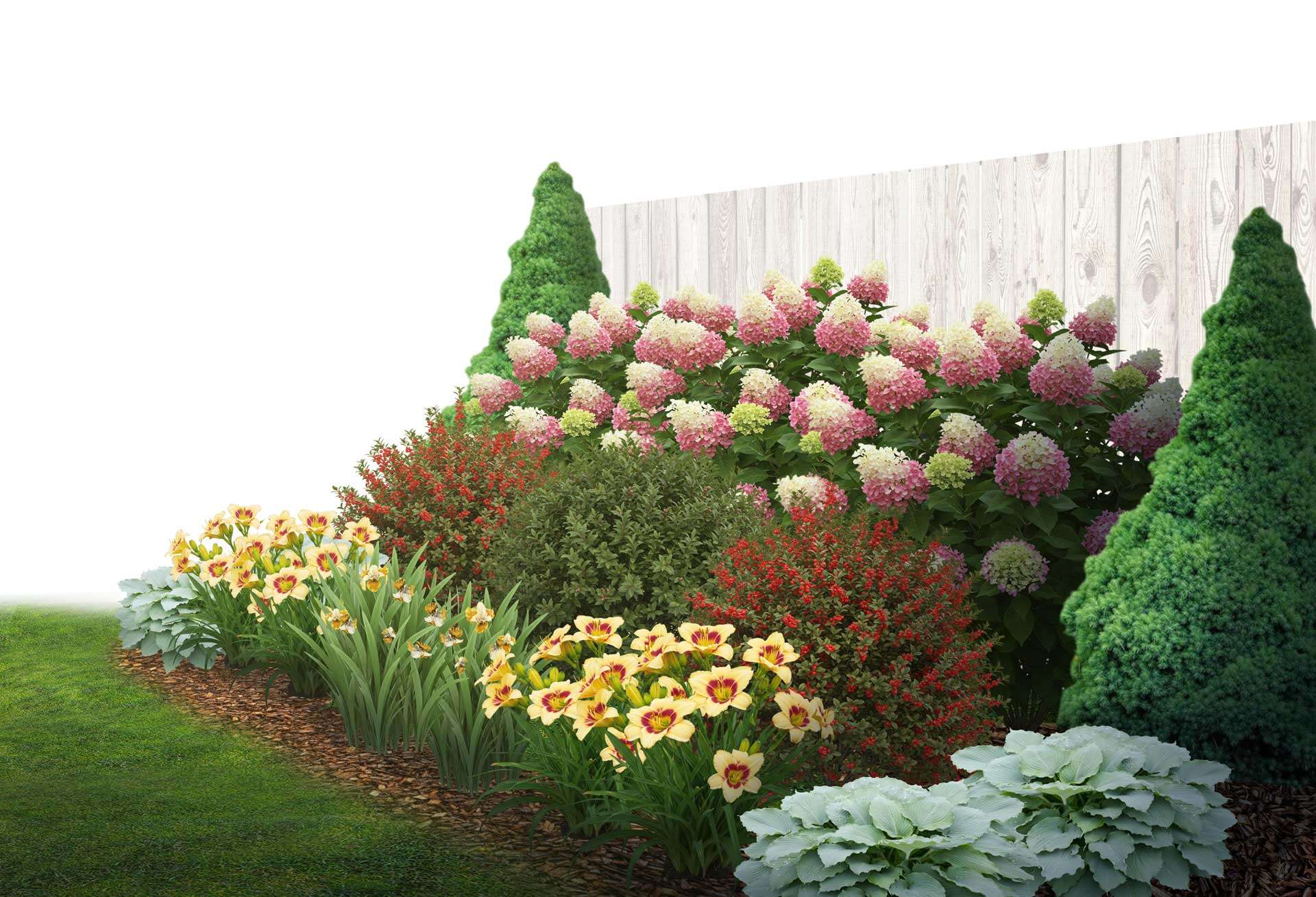

Custard Candy Daylily

Diamond Lake Plantain Lily

Pinky Winky Prime Pee Gee Hydrangea

Berry Poppins Winterberry (female)

Mr. Poppins Winterberry (male)

Colonel Mustard Siberian Iris

Dwarf Alberta Spruce
Custard Candy Daylily
Diamond Lake Plantain Lily
Pinky Winky Prime Pee Gee Hydrangea
Berry Poppins Winterberry (female)
Mr. Poppins Winterberry (male)
Colonel Mustard Siberian Iris
Dwarf Alberta Spruce
NOTE: The plans and illustrations of the various Floria flowerbeds shown represent mature gardens. When planted, plants will appear more spaced apart than in the images shown.
Key features
Garden components
To create this garden (6m x 3m), you will need:
Plants
- 4x Custard Candy Daylily (zone 3)
- 4x Diamond Lake Plantain Lily (zone 3)
- 3x Pinky Winky Prime Pee Gee Hydrangea (zone 3)
- 3x Berry Poppins Winterberry (female) (zone 4)
- 1x Mr. Poppins Winterberry (male) (zone 4)
- 2x Colonel Mustard Siberian Iris (zone 3)
- 2x Dwarf Alberta Spruce (zone 3)
Other
- Potting soil (quantity varies depending on soil quality)
- Mycorrhizae
- Compost (quantity varies depending on soil quality)
- Mulch (to reduce weeding and watering needs)
- Garden shovel
Implementation steps
1. Planning and Design
- Print the selected Floria garden plan information.
- The presented plan is a standard layout inspiration that you can adapt according to your existing design and the constraints of your land.
- Determine the desired final size of the flower bed and its exact shape (more rounded, square, rectangular, etc.).
- Measure and clearly mark the area of your flower bed.
- Use stakes and string to precisely delineate the space.
2. Soil Preparation
- Weeding: Remove all weeds (or grass) present in the area. Use a shovel, a hoe, or a sud cutter
- Soil aeration: Dig the soil to a depth of 20-30 cm to aerate it and promote drainage.
- Soil improvement: Incorporate compost and potting soil to enrich the soil and improve its structure. The amount will depend on the quality of your existing soil.
3. Planting
- Arrange the plants in the bed according to your plan. Adjust the spacing if necessary (the plan assumes mature plants).
- Water the plant thoroughly before removing it.
- Dig planting holes slightly larger than the plant root balls.
- Carefully remove the plants from their containers.
- Add mycorrhizae directly to the root ball to promote rooting.
- Place each plant in its hole, ensuring that the root collar (the base of the stem) is at soil level.
- Fill the holes with the mixture of soil, compost, and potting soil.
- Lightly firm the soil around the plants.
- Water thoroughly after planting to settle the soil.
Maintenance
- Water regularly, especially during dry spells, ideally early in the morning, until the plants are well established.
- Mulch the soil to retain moisture (10 cm of mulch), limit weeds, and protect the roots from the cold.
- For a more formal and contemporary look, you can prune the Jantar cedar (Thuja occidentalis ‘Jantar’).
- Fertilize as needed, depending on the plant type, each season.
- Prune shrubs and conifers to maintain their shape and promote growth.
- Pruning shrubs and perennials (if necessary) is generally done after flowering.
- Monitor for diseases and pests.
BONUS - Pro Secrets
*Pinky Winky Prime hydrangea flowers can be pruned in the fall, but be careful not to prune branches too hard, as they bloom on “”old wood.””
*Berry Poppins Winterberry fruit-filled branches can be pruned to make pretty festive arrangements.
In the same category
Lush Shade

Fruity Sun
Floral Sun
We can’t wait to see your Floria garden come to life.
Share a photo with us and let us know which Floria garden you’ve chosen.
