



Flowerbed Contemporary Edible
Gourmet Sun
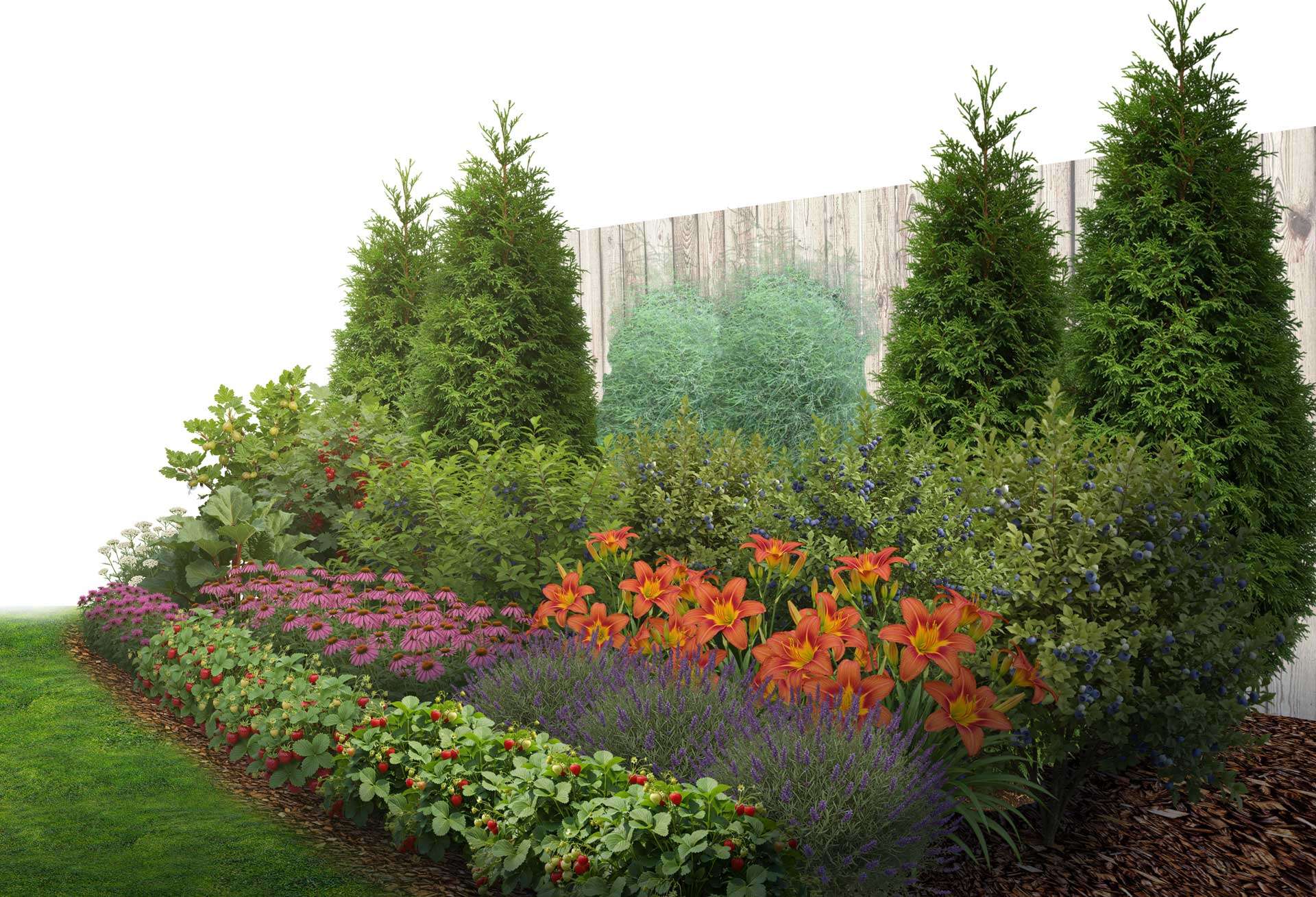

Firefly Diamond Yarrow

Millenium Asparagus

Glowing Dream Coneflower

Charlotte Strawberry

Mara des Bois Strawberry

Carrick Wildon Daylily

Munstead English Lavender

Borealis Honeyberry (Haskap)

Tundra Honeyberry (Haskap)

Balmy Purple Beebalm

Canada Red Rhubarb

Oregon Champion Gooseberry

Red Lake Currant

Emerald Cedar

Northblue Giant Blueberry

Razz Giant Blueberry
Firefly Diamond Yarrow
Millenium Asparagus
Glowing Dream Coneflower
Charlotte Strawberry
Mara des Bois Strawberry
Carrick Wildon Daylily
Munstead English Lavender
Borealis Honeyberry (Haskap)
Tundra Honeyberry (Haskap)
Balmy Purple Beebalm
Canada Red Rhubarb
Oregon Champion Gooseberry
Red Lake Currant
Emerald Cedar
Northblue Giant Blueberry
Razz Giant Blueberry
Firefly Diamond Yarrow
Millenium Asparagus
Glowing Dream Coneflower
Charlotte Strawberry
Mara des Bois Strawberry
Carrick Wildon Daylily
Munstead English Lavender
Borealis Honeyberry (Haskap)
Tundra Honeyberry (Haskap)
Balmy Purple Beebalm
Canada Red Rhubarb
Oregon Champion Gooseberry
Red Lake Currant
Emerald Cedar
Northblue Giant Blueberry
Razz Giant Blueberry
NOTE: The plans and illustrations of the various Floria flowerbeds shown represent mature gardens. When planted, plants will appear more spaced apart than in the images shown.
Key features
Garden components
To create this garden (6m x 3m), you will need:
Plants
- 1x Firefly Diamond Yarrow (zone 3)
- 2x Millenium Asparagus (zone 3)
- 6x Glowing Dream Coneflower (zone 4)
- 4x Charlotte Strawberry (zone 4)
- 5x Mara des Bois Strawberry (zone 3)
- 4x Carrick Wildon Daylily (zone 3)
- 3x Munstead English Lavender (zone 4)
- 1x Borealis Honeyberry (Haskap) (zone 3a)
- 1x Tundra Honeyberry (Haskap) (zone 3)
- 5x Balmy Purple Beebalm (zone 4)
- 1x Canada Red Rhubarb (zone 2)
- 1x Oregon Champion Gooseberry (zone 3b)
- 1x Red Lake Currant (zone 2)
- 4x Emerald Cedar (zone 3)
- 2x Northblue Giant Blueberry (zone 3a)
- 1x Razz Giant Blueberry (zone 4)
Optional (off-plan): - 2x Compatible fruit trees (apple, pear, plum, cherry, etc.)
- or 1 single fruit tree, but of the “4-in-1” type (4 varieties grafted onto the same tree)
Other
- Potting soil (quantity varies depending on soil quality)
- Mycorrhizae
- Compost (quantity varies depending on soil quality)
- Blueberry fertilizer and soil acidifier
- Mulch (to reduce weeding and watering needs)
- Garden shovel
Implementation steps
1. Planning and Design
- Print the selected Floria garden plan information.
- The presented plan is a standard layout inspiration that you can adapt according to your existing design and the constraints of your land.
- Determine the desired final size of the flower bed and its exact shape (more rounded, square, rectangular, etc.).
- Measure and clearly mark the area of your flower bed.
- Use stakes and string to precisely delineate the space.
- Plan two spaces of approximately 4 meters in diameter if you choose the fruit tree option (two varieties of the same type of fruit are generally required for best fruit production).
- If your space does not allow for two fruit trees, there are options offering four varieties of the same fruit on the same tree (the “”4 in 1″” option exists for apple trees, pear trees, cherry trees, and plum trees).
2. Soil Preparation
- Weeding: Remove all weeds (or grass) present in the area. Use a shovel, a hoe, or a sud cutter
- Soil aeration: Dig the soil to a depth of 20-30 cm to aerate it and promote drainage.
- Soil improvement: Incorporate compost and potting soil to enrich the soil and improve its structure. The amount will depend on the quality of your existing soil.
3. Planting
- Arrange the plants in the bed according to your plan. Adjust the spacing if necessary (the plan assumes mature plants).
- Water the plant thoroughly before removing it.
- Dig planting holes slightly larger than the plant root balls.
- Carefully remove the plants from their containers.
- Add mycorrhizae directly to the root ball to promote rooting.
- Place each plant in its hole, ensuring that the root collar (the base of the stem) is at soil level.
- Fill the holes with the mixture of soil, compost, and potting soil.
- Lightly firm the soil around the plants.
- Water thoroughly after planting to settle the soil.
Maintenance
- Water regularly, especially during dry spells, ideally early in the morning, until the plants are well established.
- Mulch the soil to retain moisture (10 cm of mulch), limit weeds, and protect the roots from the cold.
- It is especially important to mulch asparagus (Asparagus Millenium) because it prefers moist soil and dislikes competition from weeds.
- Fertilize as needed, depending on the plant type, each season. Blueberries (Vaccinium) require an acidifying fertilizer. Apply in spring when the soil is thawed, or according to the manufacturer’s instructions.
- Prune shrubs and evergreens to maintain their shape and promote growth.
- Pruning shrubs and perennials (if necessary) is generally done after flowering.
- Fruit trees are generally pruned during their winter dormancy to control their size (around March), making fruit easily accessible, and to improve air circulation and reduce fungal diseases.
- Monitor for diseases and pests.
BONUS - Pro Secrets
* You can start harvesting asparagus when it’s about the size of a pencil. The first year, you can harvest for a week, the second for two weeks, and so on. Normally, after mid-June, you stop harvesting to let it recover.
* Birds love haskap berries (Lonicera Borealis / Tundra). You may need to use a net if you want to be able to taste them!
In the same category
Lush Shade

Fruity Sun
Floral Sun
We can’t wait to see your Floria garden come to life.
Share a photo with us and let us know which Floria garden you’ve chosen.
